Tesla Ends Seven-Year Wait for Cybertruck Customers in Australia and New Zealand
The electric pickup manufacturer has officially withdrawn the vehicle from the region, prompting refunds for reservation holders who have waited since 2019.
By Jonathan Pierce ·
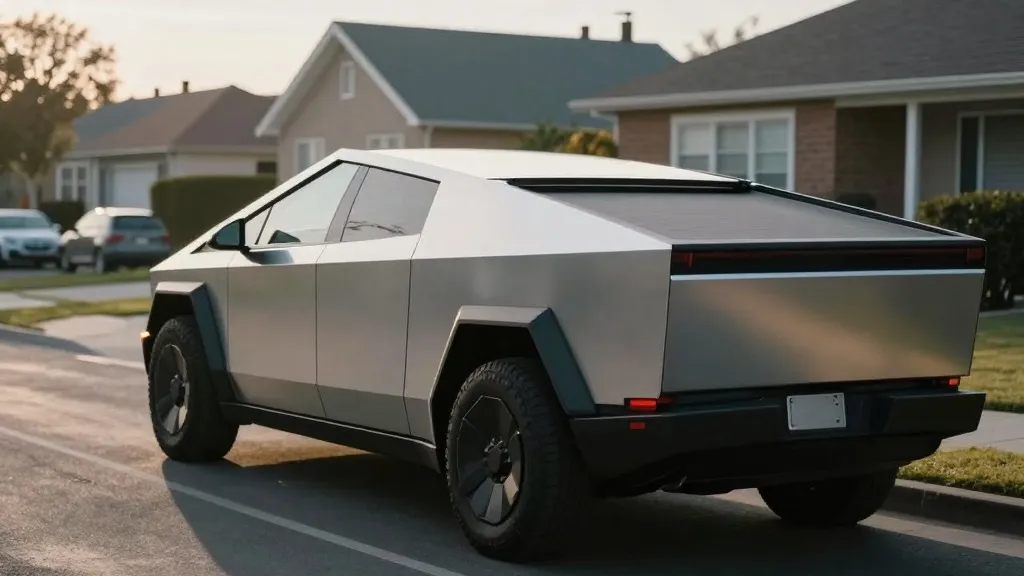
For nearly seven years, prospective buyers in Australia and New Zealand have maintained financial commitments to Tesla, anticipating the arrival of the company’s electric pickup truck in their local markets. That period of uncertainty concluded on Thursday, when the automaker formally announced the discontinuation of Cybertruck plans for the region.
Tesla notified reservation holders via email that their orders are now void, signaling the end of a long-standing product line that had been touted for the Southern Hemisphere. The correspondence, which began circulating on social media platforms and forums in the early hours of the day, confirmed that the vehicle would no longer be produced for these specific territories.
The financial implications for the company’s customers are immediate. Individuals who placed a deposit of A$150 in November 2019 will receive full refunds for all payments made. Tesla stated that these refunds are expected to be processed within a 30-day window. As a gesture of goodwill, the company is offering a free one-year subscription to its Full Self-Driving (Supervised) software to those who place new orders for a Model 3 or Model Y.
The decision marks a significant shift in strategy for Tesla, which appears to be pivoting from a dead reservation into a sale of vehicles it actually manufactures for right-hand-drive markets. This announcement came just one day after the company released its third-quarter 2026 earnings report, highlighting a potential correlation between financial performance and product portfolio adjustments.
Australia represented a substantial portion of global interest in the Cybertruck. While Tesla never officially confirmed regional breakdowns, independent crowdsourced data from 2020 indicated that Australia held the third-largest share of reservations globally, behind only the United States and Canada. By 2023, total global reservations were estimated at approximately two million, with Australia accounting for roughly 3% of that total.
The path to this cancellation has been marked by prolonged delays and shifting communications. In May 2022, Tesla quietly closed the Australian reservation page, replacing it with a button to receive updates, without issuing refunds at the time. In 2024, the company conducted a display tour in the region, and CEO Elon Musk told shareholders that certification for other markets might occur the following year. However, no right-hand-drive version was ever produced, and that subsequent year passed without delivery.
The core technical obstacle remains the vehicle’s design. The Cybertruck is currently built exclusively in left-hand drive, which is incompatible with the driving standards of Australia, New Zealand, the UK, and Japan. Furthermore, Australia requires specific certification under its own design rules, creating a significant financial burden for a vehicle that is already facing demand challenges in North America.
Recent international launches have reinforced the truck’s niche status, as deliveries have been limited to left-hand-drive markets such as South Korea, the UAE, Saudi Arabia, Qatar, Jordan, and Israel. The vehicle remains blocked in the European Union primarily due to pedestrian safety regulations. In the United States, sales volumes have declined significantly, dropping from approximately 39,000 units in 2024 to a fraction of that figure in the current period.
The financial rationale for re-engineering the truck for right-hand drive is increasingly difficult to justify. Tesla delivered 8,295 units categorized as “Other Models” in the third quarter of 2026, a category now dominated by the Cybertruck. This pace suggests annual sales of roughly 30,000 units, a fraction of the production line’s 250,000-unit capacity. For a company serving two markets with a combined population of approximately 33 million, the investment required for re-engineering appears difficult to support at current volume levels.
The outcome, while perhaps predictable to industry observers, confirms the Cybertruck’s evolution into a predominantly American product. The decision underscores the challenges of expanding a specialized vehicle to regions with different regulatory and driving standards, particularly when demand in its home market has cooled.
Source: Electrek